

Bulletproof Vest Fit, How to Measure Before Issue
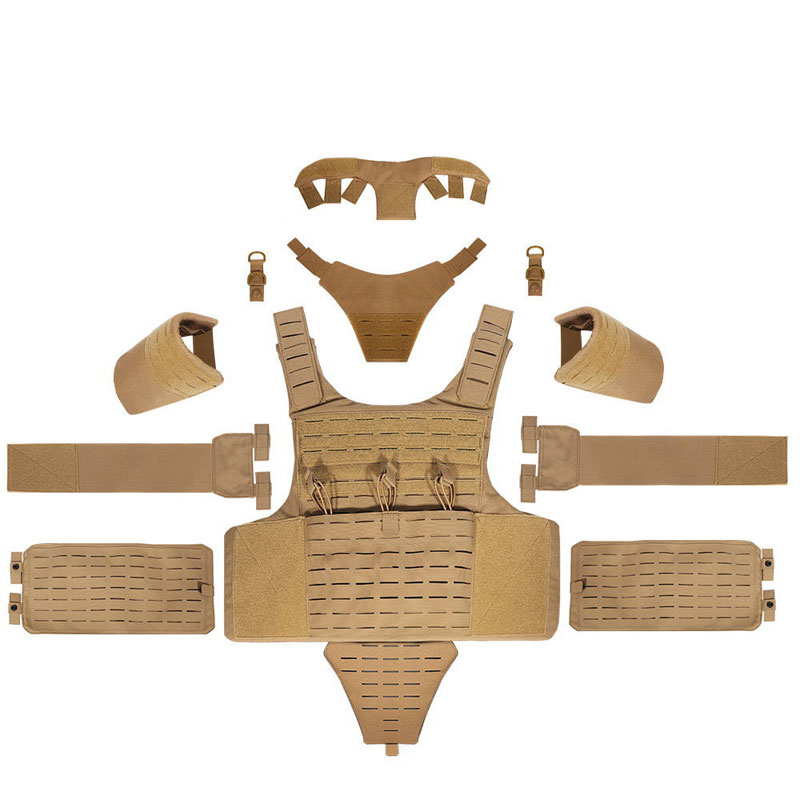
A bulletproof vest with a certified ballistic package can still fail the person wearing it, and it fails in the same way every time: worn too low, too loose, or sized off a guess. Procurement teams spend weeks comparing datasheets and then hand out bulletproof vests by eye on issue day. In the field this shows up as panels that ride below the sternum, side gaps at the ribs, and wearers who unbuckle the vest the first time they need to run. This guide is written for quartermasters, unit commanders, and distributors who are issuing a bulletproof vest order in volume, and it turns fitting into a measurement-and-checklist exercise instead of an opinion. The same steps apply whether the order is twenty units or two thousand.
The physics are simple. A soft-armor panel stops a projectile by catching and spreading its energy across the fiber package; the package can only do that where it actually covers the body. Cover the sternum to the navel and the flanks, and the vital organs are behind armor — that is the whole job of a bulletproof vest, and it is why fit belongs in your acceptance process, not after it.
Leave a gap at the side or let the panel drift down past the belt line, and you have armor on the body but not over the organs. No certificate level fixes geometry.Where the Vest Should Sit
Body armor is designed to sit around the level of the belly button — give or take about an inch — with the front panel top edge covering the sternum and the bottom edge staying above the hip bones. That position lets the wearer sit, crouch, and bend without the panel riding up into the throat or digging into the thighs when seated in a vehicle. If your unit spends its shifts in patrol cars, test the seated position first; a bulletproof vest that fits perfectly standing can become unwearable sitting if the bottom edge is too long.
The back panel should mirror the front and cover the shoulder-blade region down to the same belt-line reference. Side panels or wrap sections should close the gap at the ribs — most carriers offer either a full-wrap closure (front and back panels just touching at the side) or an overlap closure (panels overlapping by a few centimeters). For maximum side protection choose the overlap; it also gives you adjustment headroom as carrier clothing changes between seasons.
Take Four Measurements, Not One
Most sizing errors come from ordering by chest measurement alone. Use four:
1. Chest or bust circumference — around the widest part of the chest, just under the armpits, tape level, wearer breathing normally. 2. Waist or middle circumference — across the belly button, not the trouser waistband; this is the reference the bulletproof vest actually balances on. 3. Torso length — from the top of the sternum (just below the throat) down to about one inch above the navel. Two wearers with identical chests can need different panel lengths. 4. Back height — from the base of the neck at the top of the trapezius down to the belt line.
When the chest and waist measurements fall into different size rows on a sizing chart, take the larger of the two. Straps adjust a slightly large bulletproof vest down; nothing fixes a bulletproof vest that is too small. This is also the reason we ask buyers to submit both numbers with every size-break quantity in the order sheet — chest alone is not enough information to pack the container correctly.
Our published specification declares a protective area of ≥ 0.15 m² per bulletproof vest. Use that number actively: measure the ballistic panel on your approved sample and confirm the covered area matches the declaration before the production run is authorized. Protective area is the one spec that quietly varies between suppliers, and it is the one that maps directly onto coverage.
The Five-Check Fit Test on Issue Day
A correctly fitted bulletproof vest passes all five checks below in under two minutes. Train whoever runs issue day on the sequence once, and the same person can process a whole platoon in an afternoon.
Every wearer should pass five checks before signing for the bulletproof vest. They take about two minutes each and they catch nearly every fit problem we see returned.
Check 1 — mirror position: front top edge at the sternum, bottom edge at or just above the navel, no lower. Check 2 — raise the arms: with both arms fully overhead, the side panels should not pinch the armpits or lift the front panel off the chest. Check 3 — sit and crouch: sit in a chair and crouch fully; the bottom edge must not ram the throat or lap. Check 4 — strap tension: side straps tensioned so a flat hand slides under with slight drag; a loose bulletproof vest swings, an over-tight one restricts breathing under exertion. Check 5 — bounce: a light vertical hop; nothing should shift more than a centimeter. Any failure points to a panel length or size issue, not to wearer error — re-issue from a different size break.
Sizing a Whole Unit Without Fitting Every Person
For volume orders, collect chest and waist measurements on a simple form during the administrative process — the same paperwork stage where uniform sizes are collected — and build a size-curve histogram before the order is placed. Most units distribute across S–XXL in a predictable curve, and the supplier packs accordingly. Handle the outliers deliberately: the size form should include a line for torso-length exceptions (long or short torsos), and reputable manufacturers, including our production line, support made-to-measure panels for measured exceptions when the order volume justifies it.
Female personnel and wearers at the small end of the size range deserve a specific line on the form. Soft-armor panels rated at NIJ IIIA are built from flexible packages that contour well to different body shapes, but the panel length still matters, so record torso length for every wearer rather than assuming a chest size covers it. Where a unit includes wearers whose measurements fall outside the standard chart entirely, submit those numbers to the factory with the order instead of forcing a size up two rows — made-to-measure panels exist for exactly this case, and they cost the program less than an incorrectly worn vest does.
Order at least one spare bulletproof vest per ten in the most common two sizes of the unit's curve. Sizes drift with personnel turnover, and a spare in the right sizes keeps issue-day failures from becoming a second procurement cycle. Mark every carrier with the wearer's size at issue so future re-orders inherit real data instead of restarting the measurement exercise.
Acceptance Checklist for the First Shipment
Before the bulk order ships, require a pre-production sample per size and run this acceptance list: panel protective area matches the declared ≥ 0.15 m²; ballistic package fiber build matches the datasheet; carrier fabric is the specified 600D or 1000D polyester with stitching intact at all load points; straps and buckles operate through at least twenty tension cycles; and each wearer on the trial team passes the five-check fit test in their assigned size. Photograph the passing sample per size — those photos become your reference standard when the production shipment arrives, and receiving inspection compares against photos rather than memory.
Units pairing vests with rifle-rated inserts should size the plate pockets during the same trial; the ballistic plate dimensions must fit the carrier's pockets with the vest straps at working tension, not stretched. Compatibility at sample stage is cheaper than discovering pocket mismatch on delivery.
Frequently Asked Questions
How do I convert chest and waist measurements into a size order?
Use the supplier's size chart, take the larger of the two resulting sizes for each wearer, and aggregate the counts. Submit the full chest-and-waist matrix with the order rather than a single quantity per size — suppliers can then suggest curve adjustments from comparable previous programs.
Should a bulletproof vest be tight like a compression garment?
No. It should be snug with even contact across the panels, but the wearer must breathe and move freely. Tension that restricts breathing under exertion will cause the vest to be loosened or removed in the field, which is a worse protection outcome than a slightly relaxed fit.
Can one bulletproof vest be shared across shifts in a pool system?
Pool use is workable if carriers are wipe-clean and the size curve of the shifts is similar. Fit each user individually against the five checks even in pool systems, and record who is issued which size — shared vests fail most often because nobody re-adjusts the straps between users.
How often should fit be re-checked?
Re-check at any body-weight change of more than a few kilograms, whenever carrier clothing changes (winter layers alter the effective girth), and at every annual equipment inspection. A two-minute five-check pass on inspection day keeps the fleet honest for the rest of the year.